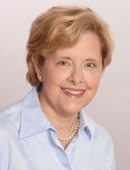
Charlotte Cunningham-Rundles, MD, PhD
Charlotte Cunningham-Rundles (Preferred Name)
img_Charlotte Cunningham-Rundles
PROFESSOR | Medicine, Clinical Immunology
PROFESSOR | Pediatrics
PROFESSOR | Immunology & Immunotherapy
Are you a patient?
Specialties
Allergy and Immunology, Pediatric Allergy and Immunology
Research Topics
Allergy, Apoptosis/Cell Death, Autoimmunity, B Cells, Biodefense, Cellular Differentiation, Dendritic Cells, Immunology, Mucosal Immunology
Multi-Disciplinary Training Area
Immunology [IMM]
Human immunodeficiency diseases; mechanisms and treatments

In this laboratory, the area of investigation is human immunodeficiency diseases and immuno-reconstitution. This work has been supported by research grants from the Food and Drug Administration and the NIH, Division of Allergy Immunology and Transplantation, Child Health and Human Development and USIDNet. We are investigating B, T cell and dendritic cell immunity in a primary immunodeficiency disease, common variable immunodeficiency (CVID.) A recent theme is the investigation of B cell memory in this and other immune defects; CD27+B cells, and especially isotype switched B memory cells are deficient, which is related to lack of normal vaccine responses. How the development of B cell memory relies upon triggering of Toll like Receptors is under investigation, using methylated oligonucleotides containing CpG motifs. TLR9 function is abnormal in this immune defect a factor that leads to poor B cell proliferation, loss of cytokine production, lack of cell adhesion and defective B cell memory responses; plasmacytoid dendritic cells are also unable to respond normally to these or other TLR ligands. We are also particularly interested in the role of specific mutations in the TACI gene, either producing or influencing the CVID phenotype, and the role of related TNF family members in the abnormal immunity in B cell defects. Further studies using gene arrays in the investigation of human B cell defects are ongoing. While the phenotype of this disease is hypogammaglobulinemia, T cell and antigen processing defects result in anergy, defective co-stimulation, accelerated apoptosis and deficient cytokine production. We previously found that some of these T cell defects could be reversed by the administration of IL-2, allowing an opportunity to explore some of the mechanisms by which this cytokine activates and regulates human T cell immunity. Since T cell receptor co-stimulation is abnormal in CVID, a deficiency of intracellular signaling pathways could explain defective proliferation, anergy, cytokine deficiency, and premature apoptosis. We have investigated in what way the CD28 signaling other co stimulatory pathways differ from normal T cells, analyzing early signaling events, membrane reorganization, up-regulation of Bcl-xL, and the effects of receptor triggering on transcription and stabilization of cytokine mRNA. In other studies we have found markedly deficient production of IL-12 by monocycle derived dendritic cells, a deficit that could further lead to anergy. We have also investigated ICOS gene and its ligand, in CVID subjects, since mutation of ICOS in humans can lead to the CVID phenotype.

MD, Columbia University College of Physicians & Surgeons

PhD, New York University

Internship, Internal Medicine, Bellevue Hospital Center

Residency, Internal Medicine, New York University School of Medicine

Certifications

American Board of Internal Medicine

2024

Cullman Family Award for Excellence in Provider Communication

Icahn School of Medicine at Mount Sinai, The Mount Sinai Hospital

2009

Best Doctors

New York Magazine

Publications

Selected Publications

Proceedings of the second Artificial Intelligence in Primary Immunodeficiency (AIPI) meeting. Jacques G. Rivière, Lisa Bastarache, Luiza C. Campos, Gerard Carot-Sans, Aaron Chin, Rumi Chunara, Charlotte Cunningham-Rundles, Lorenzo Erra, Jocelyn Farmer, Nicolas Garcelon, Elena Hsieh, Helen Leavis, Seungwon Lee, Liangying Liu, Maaike Kusters, Brian C. Lloyd, Alexandra K. Martinson, Rachel Mester, Justin B. Moore, Despina Moshous, Jordan S. Orange, Nefatia Parrish, Sarah Henrickson Parker, Bogdan Pasaniuc, Xiao P. Peng, Martine Pergent, Jordi Piera-Jiménez, Jessica Quinn, Sidharth Ramesh, Kirk Roberts, Peter N. Robinson, Guergana Savova, Christopher Scalchunes, Markus G. Seidel, Rachel Simoneau, Pere Soler-Palacin, Kathleen E. Sullivan, Marielle Van Gijn, Chung Il Wi, Dawei Zhou, Vanessa Tenembaum, Manish J. Butte, Nicholas L. Rider. Journal of Allergy and Clinical Immunology

An optimized variant prioritization process for rare disease diagnostics: recommendations for Exomiser and Genomiser. Isabelle B. Cooperstein, Shruti Marwaha, Alistair Ward, Shilpa N. Kobren, Jennefer N. Carter, Ziyuan Guo, Zackary Dov Berger, Yuka Manabe, Yong Hui Jiang, Yigit Karasozen, Yan Huang, Winston Timp, Winston Halstead, William J. Craigen, William E. Byrd, William A. Gahl, Willa Thorson, Wendy Raskind, Wendy Introne, Vishnu Cuddapah, Virginia Sybert, Vasilis Vasiliou, Vandana Shashi, Valerie V. Maduro, Vaidehi Jobanputra, Tiphanie P. Vogel, Timothy Schedl, Thomas J. Nicholas, Thomas Cassini, Terra R. Coakley, Teodoro Jerves Serrano, Teneasha Washington, Taylor Maurer, Taylor Beagle, Tarun K.K. Mamidi, Tanner D. Jensen, Tammi Skelton, Tahseen Mozaffar, Suzanne Sandmeyer, Susan Shin, Susan Korrick, Surendra Dasari, Suha Bachir, Steven Boyden, Saskia Shuman, Manisha Balwani, Mafalda Barbosa, Joanna Jen, Charlotte Cunningham-Rundles, Bruce Gelb. Genome Medicine

Bruton tyrosine kinase modulates systemic immune activation to bacterial translocation in primary antibody deficiencies. Hsi en Ho, Lin Radigan, Jingjing Qi, Vladimir Roudko, Michael J. Storek, Jo Hsuan Lee, Ramsay Fuleihan, Kathleen Sullivan, Seunghee Kim-Schulze, Charlotte Cunningham-Rundles. Journal of Allergy and Clinical Immunology

View All Publications

Physicians and scientists on the faculty of the Icahn School of Medicine at Mount Sinai often interact with pharmaceutical, device, biotechnology companies, and other outside entities to improve patient care, develop new therapies and achieve scientific breakthroughs. In order to promote an ethical and transparent environment for conducting research, providing clinical care and teaching, Mount Sinai requires that salaried faculty inform the School of their outside financial relationships.

Dr. Cunningham-Rundles has not yet completed reporting of Industry relationships.

Mount Sinai's faculty policies relating to faculty collaboration with industry are posted on our website. Patients may wish to ask their physician about the activities they perform for companies.